

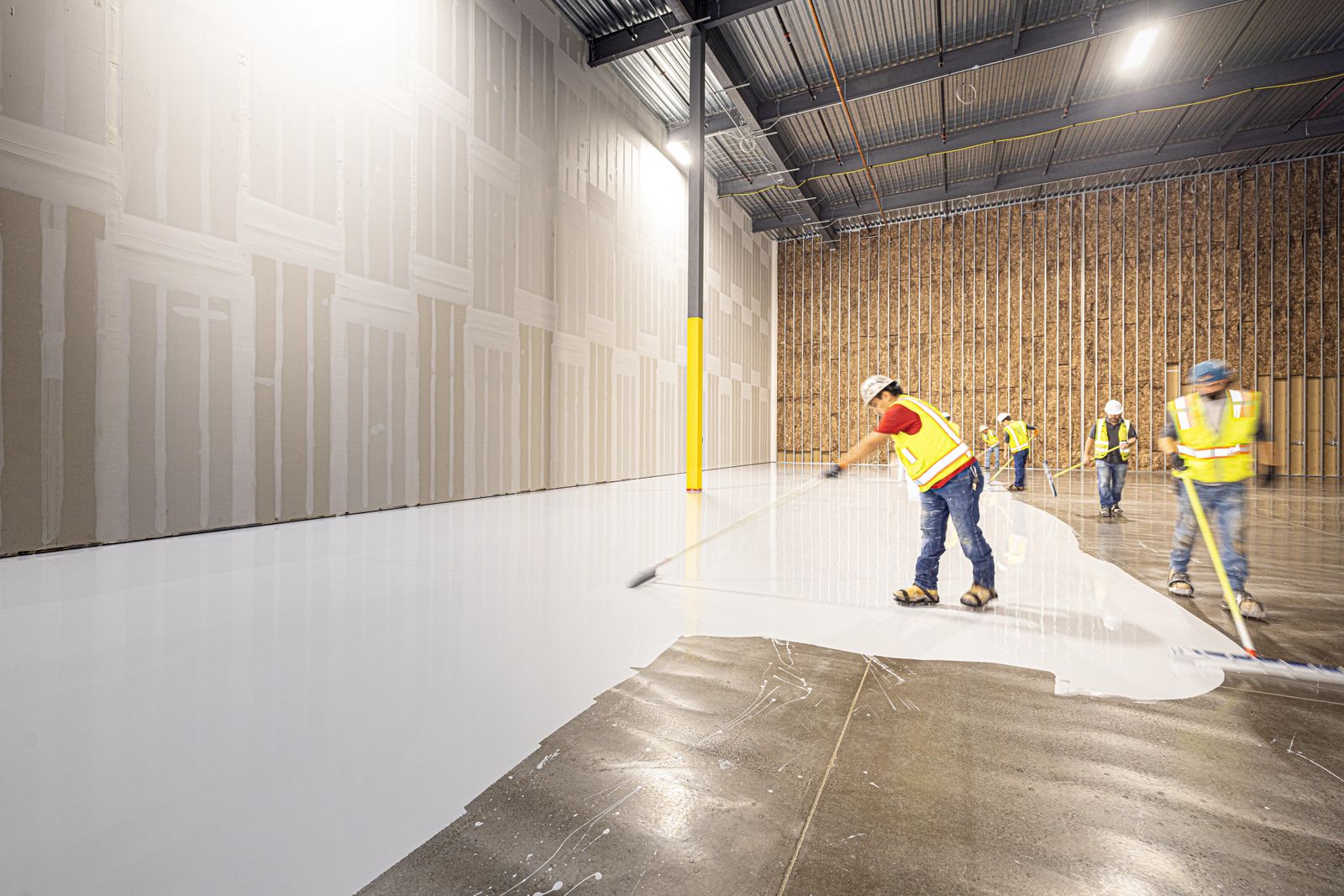
Protective Coating
Sealing and Shielding Surfaces
Protective coatings extend the life of floors, walls and structures by putting a sacrificial, resistant layer between the substrate and whatever is attacking it — chemicals, abrasion, moisture or UV.
Barrier
Protection
Chemical
Resistance
Extends
Substrate Life
Easy
Maintenance
What We Typically Find
The conditions most often reported before a protective coating scope is developed.
Substrate attacked by chemicals
Direct exposure degrading concrete or steel over time.
Abrasion from traffic and handling
Surfaces wearing down where plant and pallets move.
Moisture penetrating the structure
Porous substrates absorbing water and deteriorating.
Surfaces that cannot be cleaned
Porous finishes holding contamination in production areas.
What This Service Covers
Service Scope
- Substrate survey and exposure assessment
- Mechanical preparation and cleaning
- Repair of surface defects
- System selection against the exposure
- Primer application
- Protective coating to specified thickness
- Detailing at junctions and penetrations
- Film thickness and adhesion testing
Suitable For
- Car Parking Areas
- Warehouses & Logistics
- Industrial Facilities
- Commercial Buildings
- Retail & Shopping Centers
- Hospitals & Labs
- Schools & Educational
- Residential Garages
Key Benefits
- Protects against the actual exposure
- Chemical and abrasion resistant
- Blocks moisture ingress
- Significantly extends substrate life
- Cleanable, maintainable surface
- Cheaper than replacing substrate
- Verified by thickness and adhesion tests
- Specified per environment
Work Methodology
Five controlled stages from first inspection to final quality check.
 1
Assessment
Identify the exposure — chemical, abrasion, moisture or UV — and the substrate condition.
 2
Preparation
Mechanically prepare, clean and repair the surface.
 3
Priming
Apply the primer matched to substrate and coating system.
 4
Coating
Apply the protective system to the specified dry film thickness.
 5
Testing
Check adhesion and film thickness before handover.
Specified To The Condition
Systems are selected according to substrate, exposure and project specification. The final specification is confirmed after a site assessment.
Epoxy Protective Systems
Chemical and abrasion resistance for internal environments.
PU Protective Systems
Where UV stability and flexibility are needed.
Chemical-Resistant Linings
Heavy-duty systems for bunds and process areas.


Questions About Protective Coating
Related Epoxy & Coatings Services
Epoxy Flooring
Durable Floors. Safer Spaces. Longer Life.
ViewEpoxy Painting
Hard-Wearing Wall Protection
ViewPU Coating
Flexible, UV-Stable Protection
ViewParking Flooring
Car Park Decks That Last
ViewIndustrial Flooring
Floors Built for Production
ViewLine Marking
Clear, Durable Floor Layout
View